Psychotherapy
About
I help individuals, couples, and families identify and shift the often unseen patterns perpetuating their suffering. My aim is to help you understand yourself, others, and to make meaningful changes that lead to a more fulfilling and satisfying life. I particularly enjoy working with those who have tried therapy before but have not yet found relief or were discouraged by their previous experience. I am skilled at working with individuals grappling with the impacts of trauma, longstanding relationship problems and mood issues, as well as couples in conflict or struggling to connect; particularly when it comes to sex and parenting. I also enjoy helping athletes and others in high-performance and high-demand situations negotiate the unique stressors that often impact vitality and self-esteem.
My approach
I balance both depth and skill work, using a relational approach to help create the change needed to get unstuck. I work with people who want to be listened to and understood at a deeper level, and I use my understanding of personality dynamics to move you forward. I’m skilled at getting to the roots of a variety of presenting problems. While I fundamentally have a psychoanalytic sensibility and approach to practice, I pull from different modalities and traditions to help move you inward and ultimately, forward. With individuals, I also pull from Acceptance and Commitment Therapy, Existential, Humanistic, and Cognitive-Behavioral approaches. With couples, I blend aspects of Emotion Focused Therapy, Psychobiological Approach to Couples Therapy, and the Tavistock model. With Families, I use experiential, structural, strategic, and play-based approaches.
FAQ
The purpose of psychotherapy is change. People come to psychotherapy for many different reasons, but fundamentally the therapeutic process is focused upon facilitating shifts within and between the patient(s) and their relationships with self, others, and the world. The therapeutic process is centrally aimed to both increase insight and to create new experiences. I aim to expand possibilities for the patient, couple, or family who often feel stuck in painful ways of doing and being. People often come because something feels wrong, painful, dissatisfying, or empty. My job is to not only address what is troubling, but to also help people clarify and pursue what feels meaningful, fulfilling, and good-enough. Often the work in psychotherapy can look like aiming for common vital signs of mental health, such as: greater attachment security, an increased sense of personal agency, a more integrated and coherent experience of self and others, building self-esteem that is realistic and reliable, increased emotional regulation and resilience, increased ability to reflect on and understand the experience of self and others, greater ease in working interdependently, increased sense of presence and vitality, capacity to play, more adaptive and flexible defenses against pain, greater capacity for forgiveness, acceptance, and gratitude.
People have many associations with the word “psychoanalytic” or “psychodynamic” (same thing, different brandings) that often conjure images of Freud and his many cigars, whatever you may have learned or heard in psych101 about how outdated it is, or a fear that I may ask you to lay down on the couch and not look at me. Here are some basic tenants of a psychoanalytic sensibility that I believe are fundamental, timeless, and influence how I approach therapy:
The Unconscious
Nothing too spooky about this, it basically just means that we are often unaware of why we think, act, or feel the way we do. Sometimes we don’t even know what we’re feeling. In some respects, we are simply strangers to ourselves until we are in the presence of an attentive other who is committed to helping us understand ourselves more fully and deeply. Something is always being communicated–through our actions, our feelings, our dreams, our fantasies, and of course, our thoughts…and often we don’t really know what we’re thinking until we’re given the space to freely associate in the safe container of the therapeutic frame. Part of my job is helping bring these unconscious dynamics into your awareness so you have more choice and agency in your life–rather than unknowingly running on outdated or old scripts that might not be serving you anymore. Cognitive scientists call it “implicit,” psychoanalysts call it “unconscious”–tomayto, tomahto.
The Therapeutic Relationship
We are not blank slates, and so we often bring our characteristic or habitual ways of thinking, feeling, and relating to self and other into the therapeutic relationship itself; given enough time and depth, this type of professional relationship is particularly salient in its ability to highlight relational or attachment patterns that arise in the context of seeking or needing help. With couples, this primary intimate relationship is also often the context in which I try to attune and bring awareness to the ways in which the relationship between therapist and patient and the intimate life of the couple can offer data points about both what is troubling you, and what could be needed to shift you into a different position and experience.
Affect as Primary
I view affect, feeling, or emotion as primary to human psychological life and the treatment process. We come into the world in a soup of primal sensation and feeling before we have the language to organize our experience. Though the symbolic function of language and the actions we do and don’t take are crucial to understanding and shaping who we are, feeling and sensation are primary data points that move much quicker and often are at the roots of the troubling dynamics that bring us to therapy. We can “know” something cognitively and without “knowing” it in a way that moves us emotionally. Language can be used to conceal as much as it can be used to reveal, and so I aim to help patients identify and make meaning of their emotional and sensory life.
Defenses
We all have ways of defending against what feels uncomfortable, painful, or dissonant. There are things we would rather just not know about ourselves, others, or the world. We all use defenses of different kinds to maintain a psychological equilibrium–however, what often brings people to therapy is when what used to work does not work so well anymore. When previously adaptive defenses become too rigid, generalized, or costly this can create suffering or problems in living that can be identified and reworked in the therapeutic process.
Developmental Focus
I try to understand your current problems, strengths, and dynamics through the lens of your previous experiences. Throughout our early years, we develop templates, scripts, or schemas based on our environment and temperament. We learn what to expect, how to act, what love means, how to express, how not to express, and so on through our early caregiving relationships, important peer relationships, formative romantic relationships, etc. Understanding you in the context of your broader development helps situate what brings you to therapy in a particular context; this can help make what often feels overwhelming, confusing, or nonsensical more clear.
Ambivalence and Conflict
As Walt Whitman said, we contain multitudes. We often hold multiple and sometimes contradictory thoughts, feelings, or motives about the same thing. I aim to highlight and increase patients’ tolerance of ambivalence and work with internal conflict in a way that can help alleviate suffering. Though we are often of two (or more) minds or hearts about the same matter, often we’re only in tune with one, we disavow or judge the other, or we oscillate between extreme positions without integration. I try to help patients create a reflective space where they can start to hold more of their own experience in mind, in its layers and contradictions, so that they can make more meaningful and clear choices about where they want to go.
Many patients understandably want to use their health insurance to cover psychotherapy services. In the past, I have worked with health insurance companies as both a provider and a patient, and appreciate accessibility as a factor in the provision of treatment. However, I have chosen to no longer accept or use insurance for the following reasons:
–Confidentiality. When using insurance to pay for psychotherapy, disclosure of your diagnosis, treatment notes, and assessment/treatment plan are often required in order to receive payment and continue care. This often gives non-clinical staff access to private health information about you. In my view, this undermines a fundamental tenet of psychotherapy, which is providing the highest standard of privacy and confidentiality possible in order for you to speak as freely as possible.
–Personalized Care. I believe that the frequency, length, methods, and goals of treatment should be mutually and collaboratively decided upon between provider and patient. Common practices such as prior authorization and audits often undermine the therapeutic frame, dictating the terms and parameters of treatment without prioritizing your agency and your provider’s clinical judgment. Health insurance companies are often more interested in managing care in a way that maximizes their profits and minimizes the frequency of sessions rather than supporting a depth and quality of care that is maximally effective.
–Superbills. I can provide superbills to you upon request if you would like to submit them to your health insurance company for reimbursement for out-of-network services. Your mileage may vary, and this does require a disclosure of a psychiatric diagnosis–but it does offer an alternative route to accessibility and affordability.
–Continued Commitment to Accessibility. For patients unable to afford my full fee, I offer a limited number of slots at a markedly reduced rate. I offer a reduced rate for veterans, first responders, and college students.
While it’s not possible to discern whether or not I am the right fit for you without meeting and deciding this together, here are some things I choose to embody as a psychotherapist that I believe are important to consider when deciding who to work with:
–My own time as a patient. When seeking a provider, I would strongly urge you to consider seeking out a psychotherapist who has engaged in their own work as a patient–extensively. Personal therapy used to be mandatory when training to become a psychotherapist; unfortunately this has fallen out of favor. Part of the responsibility of a psychotherapist is being aware of and containing personal dynamics that can and do impact the treatment. For better and worse, therapists are human too! We all have blindspots and neuroses that must be reckoned with to provide quality care. I do not ask things of my patients that I have not asked of myself.
–I limit my caseload. One of the reasons I have chosen to work in private practice rather than an agency is that many agencies require burdensome caseloads that make it difficult to think and feel deeply with each patient. I reflect on what my own limitations are when considering the depth and quality of care I want to provide each patient, and have chosen a cap that allows me to hold you in mind without overextending myself. For me this means that I do not carry more than about 15 cases at a time, and it is not uncommon that I see patients multiple times a week.
-I am a forever student. I believe that psychotherapy is both an art and a science that requires years of extensive training, self-reflection, and personal growth to even approach mastery. I am committed to continuing to learn through supervision, training, consultation, and personal therapy. This is not a casual enterprise, nor a 9-5 for me. I believe in this craft and am devoted to it without being dogmatic nor unrealistic about what it can offer.
–People, not diagnoses. You cannot be found in the DSM or in any manual. While diagnosis can be helpful in situating someone’s distress in a particular area of human experience with potential drivers, sequelae, and treatment modalities–it is the beginning of a conversation and formulation rather than an end point. I treat human beings, not diagnoses. Beneath the surface, one person’s depression, anxiety, psychosis, or post-traumatic distress is often quite different from another’s. The truth in the paradox of this work is that even with similar diagnoses or foundational principles of human psychology, there is a way in which psychotherapy must continually be re-invented and made new for each new patient in the treatment. I don’t use manuals, and I believe the primary purpose of intellectual know-how is so that I can more deeply sink into being with each person as they are.
What can I expect from therapy?
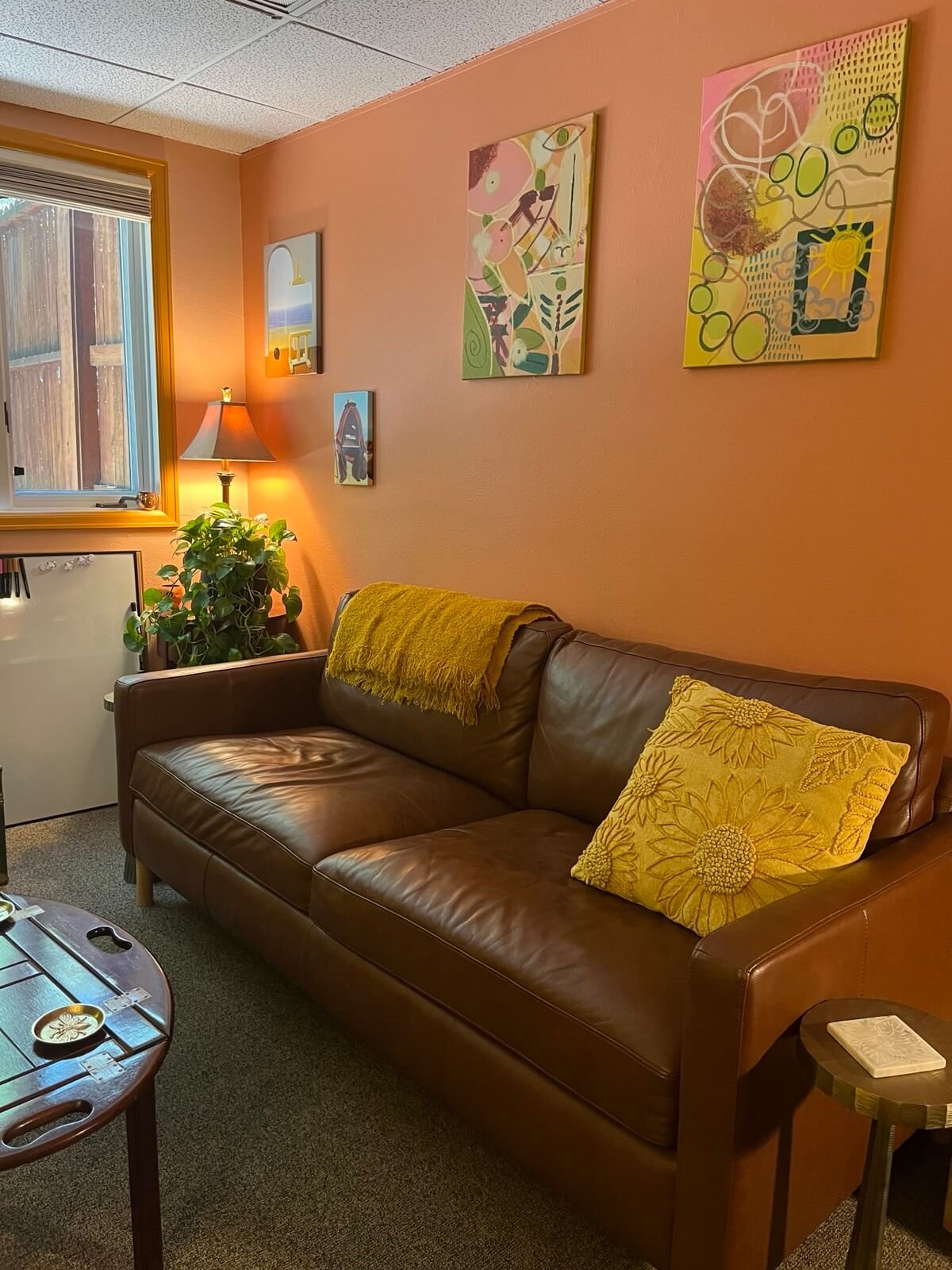
I try to get a sense of what’s troubling you, what may be contributing, how you’re hoping therapy might be helpful, and what brings you in at this particular time in your life–rather than earlier or later.
I work to take a fairly extensive psychosocial history that situates what’s troubling you in history/context, but also you as a whole person. I don’t like to move too quickly into interventions or moving the furniture around before I understand the layout of the room; we first develop a joint and working understanding of you and your problem in depth before meaningful shifts can happen.
Once we have established a joint and working understanding of what would be helpful to change, we discuss how we can work together to make this change more possible.
It is not possible to know this in advance. I will make every effort to be as transparent with you as possible about my impressions of the length of treatment that may be required to address what you hope to address. Longstanding, entrenched problems that are supported by load-bearing beliefs, patterns, and ways of being/doing often take longer to rework. Sometimes new problems or refined understandings of the problem arise during the course of treatment that shift the timeline. Sometimes people break out of patterns more quickly than they anticipated.
Click here for an excellent info sheet/guide on getting started in psychotherapy and what to expect!
Pricing
I typically see patients for 55-minute sessions, and my fee is $150 for individuals, $175 couples and families.
Sometimes longer sessions are preferable, particularly for couples and families, in which case I charge $195 for 75-minute sessions.
It is not uncommon for me to see patients multiple times a week, and in this case we negotiate a lower fee for the additional session(s) per week.
For patients unable to afford my full fee, I offer a limited number of slots at a markedly reduced rate.
I offer a reduced rate for veterans, first responders, and college students.
For those with out-of-network insurance benefits, I can provide a superbill for services for potential reimbursement.
I take cash, check, venmo, and zelle.
Individuals
55-minute session
Individuals
$ 150
session
Couples and Families
55-minute session
Couples and Families
$ 175
session
Longer Session
75-minute session
Longer Session
$ 195
session